
How to Identify Real Titanium: 4 Reliable Tests You Can Do at Home
Titanium is widely used in cookware, drinkware, medical devices, aerospace parts, and premium consumer goods. But as demand grows, so does the number of stainless‑steel or aluminum products falsely marketed as titanium.
This guide explains how to identify real titanium using four reliable tests—each based on material science and suitable for home or professional use.
What Makes Titanium Unique? (Quick Answer)
Titanium is recognized for its low density, non‑magnetic behavior, dark grey color, and ability to form oxide layers that change color under heat. These properties make it easy to distinguish from stainless steel or aluminum using simple tests.
1. Density Test
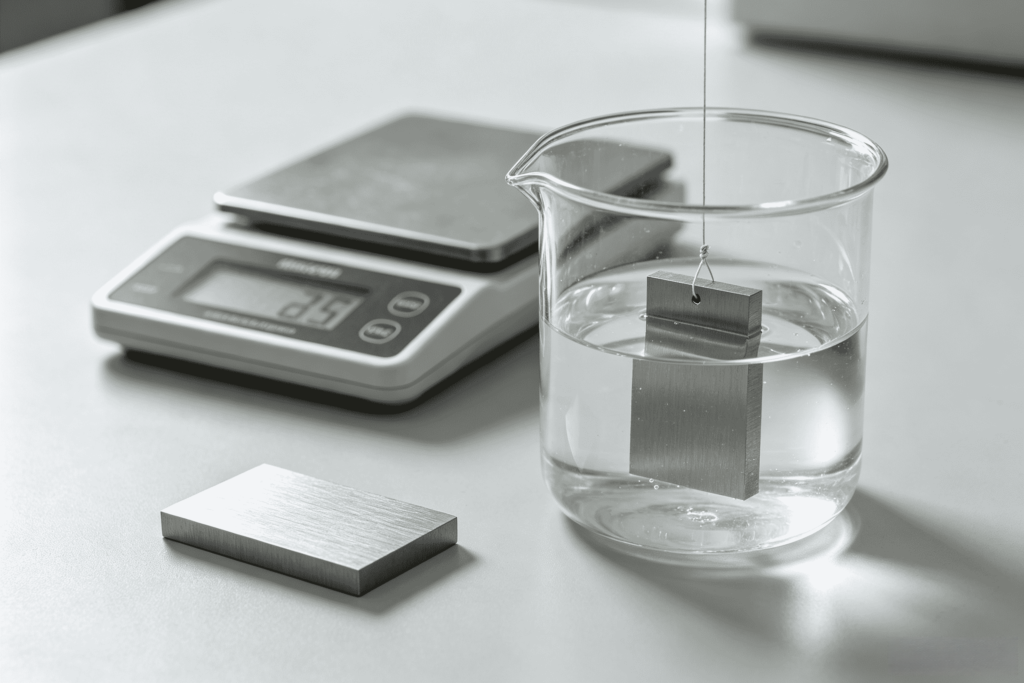
— The Most Accurate Way to Identify Titanium
Titanium has a density of 4.51 g/cm³, which is about 45% lighter than steel.
If you can measure weight and volume, density testing is the most reliable method for consumers and engineers.
“Titanium density of 4.51 grams per cubic centimeter (g/cm³), which is lower than stainless steel but higher than aluminum.”
How to Perform a Density Test
Measure volume
Regular shapes: use geometric formulas.
Irregular shapes: use water displacement.
Measure weight
Use a kitchen scale or digital balance.
Calculate density
Why This Test Works
Titanium’s density is defined by ASTM standards. Manufacturers cannot fake density without changing the material itself, making this test extremely reliable.
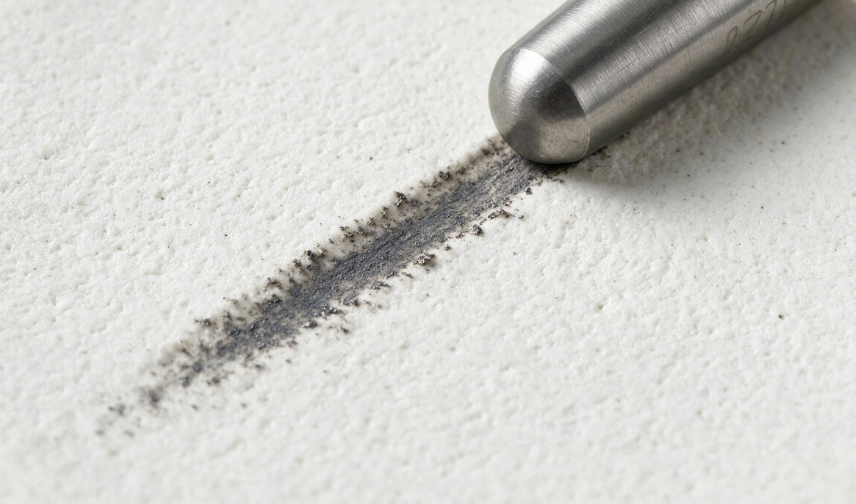
2. Ceramic Scratch Test
— The Fastest Home Test
If you need instant verification, the ceramic scratch test is the simplest method.
“Titanium… leaves a distinct grey mark… The mark is actually a layer of titanium oxide.”
How to Do It
Use white unglazed ceramic (bottom of a mug or tile).
Press the metal firmly and draw a line.
Expected Result
Real titanium: leaves a dark grey or black streak that does not wipe off.
Stainless steel: usually leaves no mark or a faint streak that disappears.
Why It Works
Titanium forms a natural oxide film. When rubbed against ceramic, tiny particles transfer and bond to the surface.
Professional Tip
Use a ceramic piece you don’t mind scratching—this test leaves permanent marks.
🖼 Image
Filename: titanium-ceramic-scratch.jpg
ALT: Titanium ceramic scratch test result
Caption: Genuine titanium leaves a dark oxide streak on unglazed ceramic.
Recommended Size: 1200×800
3. Heat Color Change Test
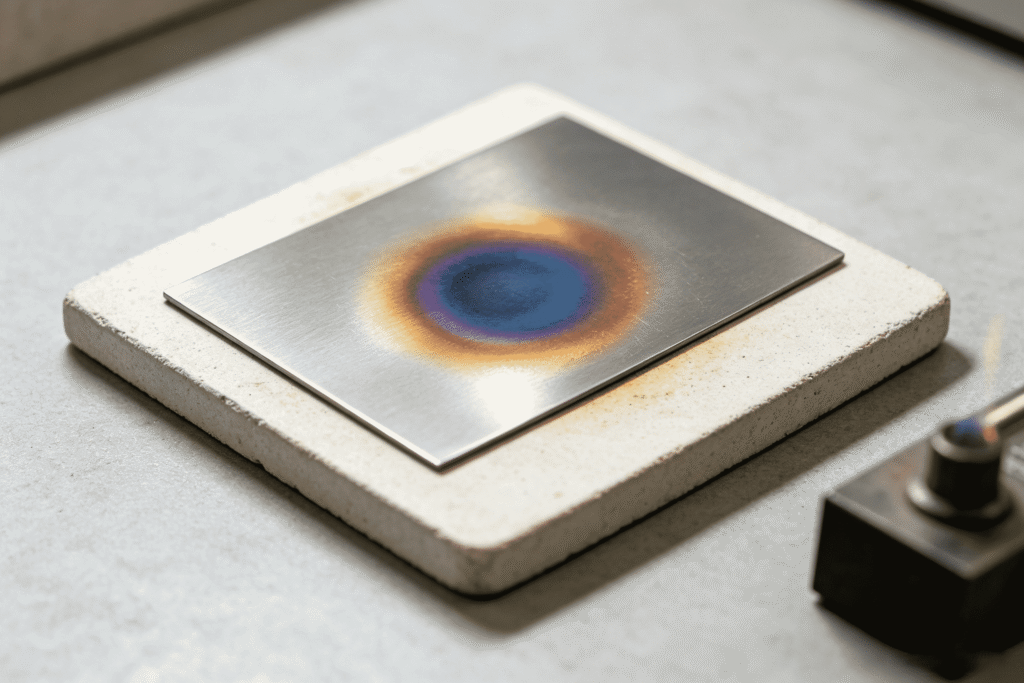
— Titanium’s Thermochromic Behavior
Titanium changes color when heated due to oxide layer growth.
This color progression is unique to titanium and cannot be replicated by stainless steel.
“Genuine titanium will transition through a series of colors… Silvery white → Light yellow → Gold → Blue → Purple → Greyish red → Grey.”
How to Perform the Test
Heat the item over a gas stove or torch.
Observe color changes as temperature increases.
Why It Works
Titanium forms a thin oxide film. Light interference creates visible colors depending on oxide thickness.
Safety Note
Only test items that are uncoated and safe to heat.
🖼 Image
Filename: titanium-heat-color-change.jpg
ALT: Titanium oxidation color change under heat
Caption: Titanium’s oxide layer produces distinct colors as temperature rises.
Recommended Size: 1200×800
4. Magnetic Test
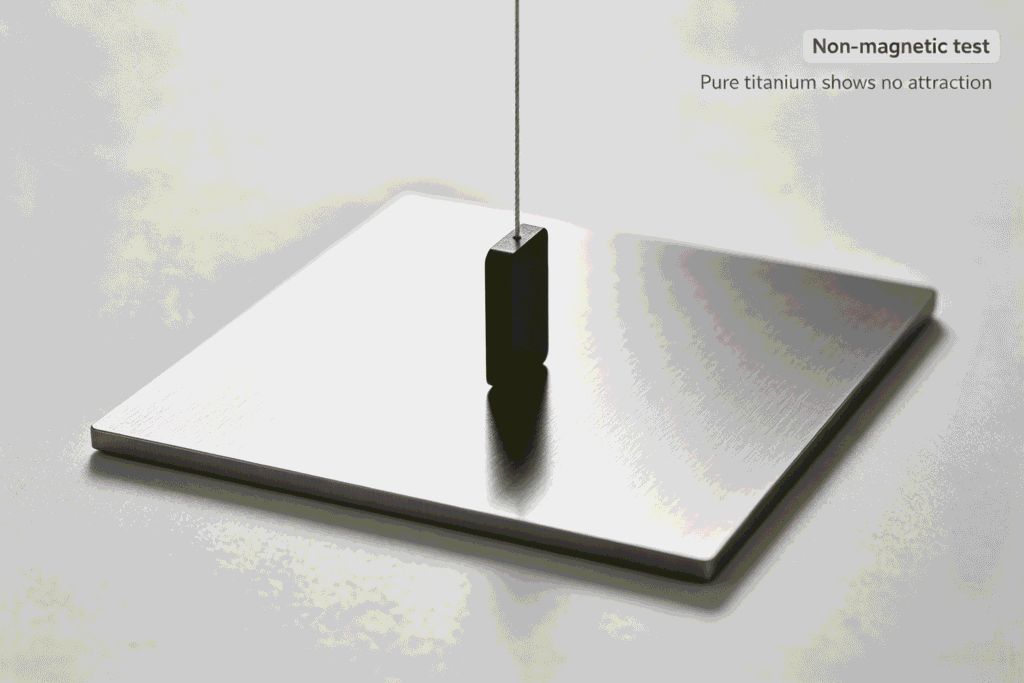
— Quick Screening for Stainless Steel Imitations
Titanium is non‑magnetic.
If a magnet sticks, the item is not pure titanium.
“Titanium is classically non-magnetic… If the product is pulled toward the magnet, it is almost certainly not pure titanium.”
How to Test
Use a strong neodymium magnet.
Bring it close to the item.
Expected Result
Real titanium: no attraction.
Fake titanium (steel): strong attraction.
Titanium alloys with iron: may show weak attraction.
Why It Works
Titanium’s crystal structure does not support magnetic alignment, unlike ferritic or martensitic stainless steels.
🖼 Image
Filename: titanium-magnetic-test.jpg
ALT: Magnetic test for titanium authenticity
Caption: Pure titanium does not respond to magnets.
Recommended Size: 1200×800
Additional Signs of Genuine Titanium
These observations help confirm authenticity:
Color & Finish
Titanium has a deep, muted grey tone, not the chrome-like shine of stainless steel.
Corrosion Resistance
Titanium does not rust, even with sweat or water exposure.
Weight & Feel
Titanium feels lighter than steel but heavier than aluminum.
Heat Behavior
Color changes under heat indicate real titanium, not coating failure.
“Titanium develops a unique oxide layer when heated… This is a hallmark of genuine titanium.”
Professional Verification Methods (For OEM & Industrial Buyers)
If you need certified confirmation:
XRF Analysis
Instantly identifies titanium content and alloy grade.
ASTM Density Verification
Used for bars, sheets, and industrial components.
Chemical Testing
Acid reactivity confirms titanium purity.
Mill Test Certificates (MTC)
Authentic titanium should include:
Chemical composition
Mechanical properties
Grade identification
Production batch
“Certified Quality: We provide Mill Test Certificates (EN 10204 3.1)… Global Standards: ASTM B265, ASTM B348.”
FAQ: People Also Ask
- How can I identify titanium quickly without tools?
Magnetic test + weight comparison. Titanium is non‑magnetic and significantly lighter than steel. - Does real titanium leave a scratch mark?
Yes. It leaves a dark grey streak on unglazed ceramic due to titanium oxide. - Does titanium change color when heated?
Yes. It forms an oxide layer that shifts from gold to blue to purple. - Can stainless steel imitate titanium?
Visually yes, but density, magnetism, and heat behavior reveal the difference. - Is titanium supposed to be shiny?
Raw titanium has a muted grey finish unless mirror‑polished. - Does titanium rust?
No. Titanium is highly corrosion‑resistant. - Why does titanium show fingerprints?
Skin oils react with the oxide surface but wipe off easily. - Can titanium be magnetic?
Pure titanium is non‑magnetic. Some alloys may show weak attraction. - What is the most accurate titanium test?
Density testing (4.51 g/cm³). - What professional tool detects titanium?
XRF analyzers. - How do I test titanium without a scale?
Use ceramic scratch test or color analysis. - What color is real titanium?
A darker, deeper grey compared to stainless steel. - Does titanium spark when ground?
Yes—white sparks (industrial test). - Why is titanium more expensive?
Low density, high strength, corrosion resistance, and complex manufacturing. - Should titanium products include documentation?
Yes. Grade, origin, and MTC certificates indicate authenticity.