
Titanium Cookware vs Ceramic: The Practical Buyer’s Guide for Safety, Durability & Daily Use
When people compare titanium cookware vs ceramic, they want a clear answer on safety, longevity, and real-world performance. The key is what actually touches the food. Most “ceramic” pans are metal bodies with a ceramic-style coating. Many “titanium” pans are either genuine titanium surfaces or titanium-reinforced coatings. This difference drives everything from early convenience to long-term value.
This guide is written for home cooks and for importers, distributors, and private-label buyers who need accurate positioning rather than marketing slogans.
Quick Comparison: Titanium Cookware vs Ceramic
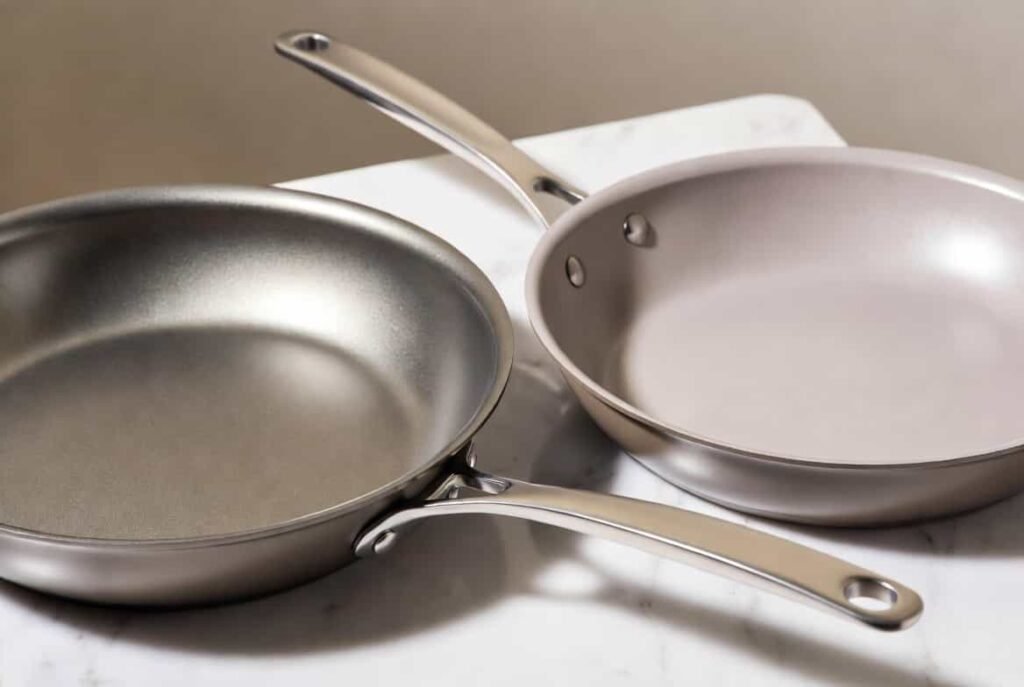
| Factor | Titanium Cookware | Ceramic Cookware | Takeaway |
| Food-contact surface | Best when genuine titanium or titanium-lined | Usually ceramic-style coating over metal | Compare the actual surface |
| Food release | Technique-based | Excellent when new | Ceramic wins early convenience |
| Durability | Strong with real titanium surface | Depends on coating wear | Titanium stronger long-term |
| Best for | Daily durable use, premium lines | Budget + easy low-oil cooking | Match to real use case |
Choose ceramic for easy release and lower price when the pan is new and used gently. Choose titanium for a stable, corrosion-resistant food-contact surface that does not rely on a temporary coating. Tri-ply titanium usually offers the best balance of surface stability and heat distribution.
What Ceramic Cookware Really Means
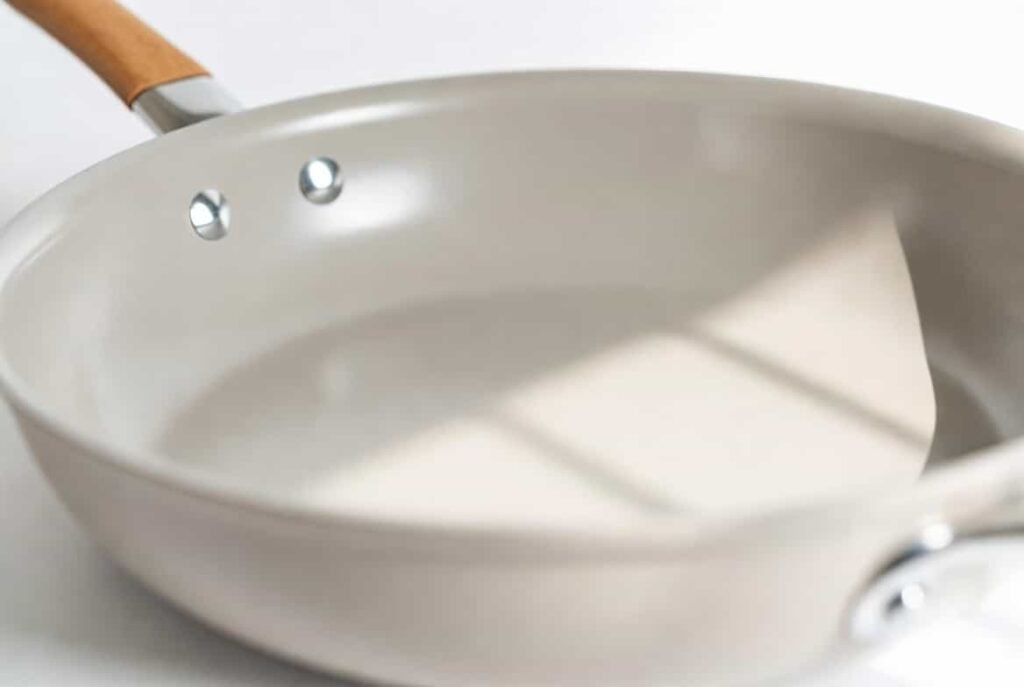
In today’s market, ceramic cookware almost always means ceramic-coated cookware. A metal body (usually aluminum) receives a sol-gel ceramic-style coating that creates the nonstick-like surface. That coating is the food-contact layer, so its quality, thickness, and wear resistance matter more than the word “ceramic.”
These coatings are often promoted as PTFE-free and PFAS-free. Formulations and testing standards vary, so professional buyers should request finished-product food-contact documentation. The main limitation is wear: overheating, metal utensils, abrasive cleaning, or dishwasher use can reduce release performance over time. A worn coating does not automatically make the pan unsafe, but it changes both performance and the practical safety discussion.
Position ceramic-coated pans as convenient coated cookware, not as a lifetime material solution.
What Titanium Cookware Really Means
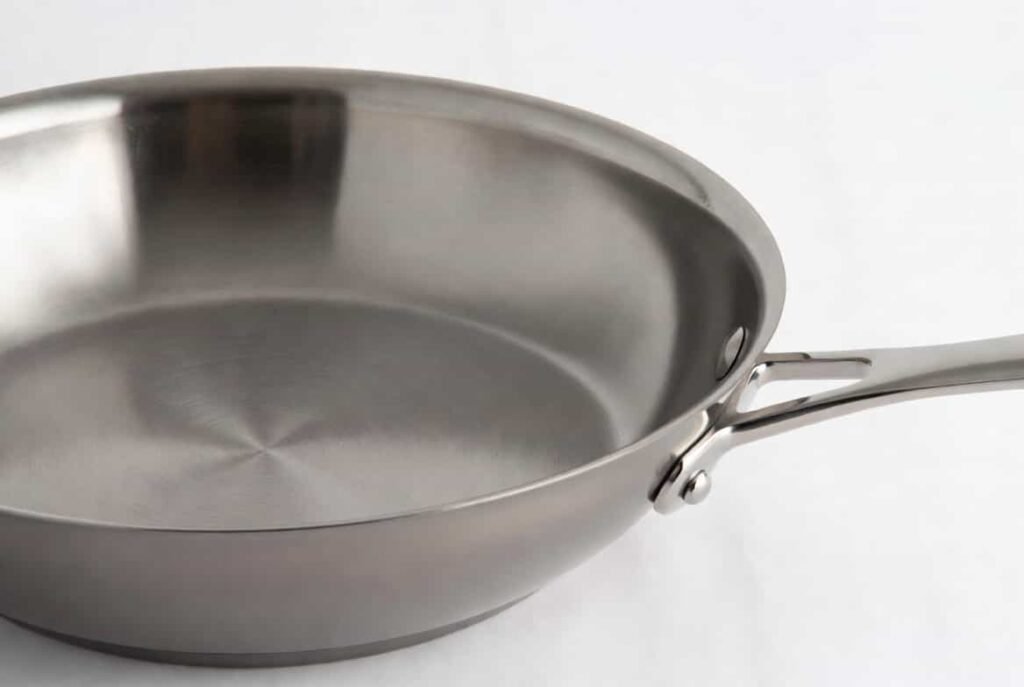
Titanium cookware requires precise definition. It may be pure titanium, titanium-lined, tri-ply titanium, or titanium-reinforced nonstick. These are not the same.
Real titanium cookware means the food-contact surface is titanium. It offers corrosion resistance, low reactivity, and a stable oxide layer. Titanium-reinforced nonstick still behaves like coated cookware and should not be confused with a genuine titanium surface.
Tri-ply titanium keeps titanium on the food side while adding a conductive core for better heat distribution. Clear product descriptions that specify construction (pure, lined, or tri-ply) build trust with both consumers and B2B buyers.
Safety: Stable Metal Surface vs Coating Condition
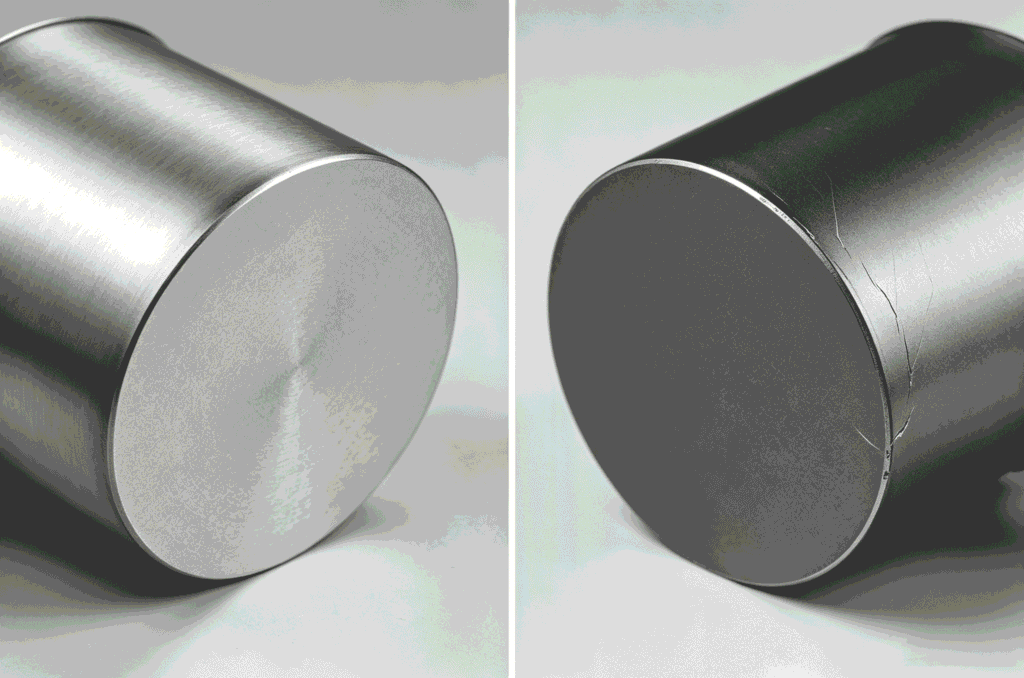
Safety is not a simple “one is always better” comparison. Both materials can be appropriate when manufactured and used correctly. The useful frame is stable metal surface versus coating-dependent surface.
With genuine titanium, the questions are whether the food-contact layer is actually titanium and whether the finished product is properly made. With ceramic-coated pans, the questions center on coating integrity and supporting tests.
Strong safety language should stay evidence-based and tied to intended use rather than absolute claims such as “completely non-toxic” or “chemical-free.” This approach is more credible for consumers and safer for brands, especially on export and B2B pages.
Durability, Scratches, and Expected Lifespan
Genuine titanium usually holds the stronger long-term position. Normal use marks or discoloration are different from a nonstick coating gradually losing its original release. When the surface is real titanium and the construction is solid, the pan can remain useful for a long time.
Ceramic-coated pans typically perform best early and then lose easy release as the coating wears. Decline is faster with empty overheating, abrasive cleaning, or metal utensils. Retail pricing should reflect expected service life: a lower-priced ceramic pan that needs earlier replacement can still be good value for casual users; a higher-priced titanium pan can deliver better overall value for buyers who want fewer replacements and clearer material positioning.
Final Recommendation & Buyer Checklist
For home cooks:
- Ceramic is practical when easy release and price matter most.
- Titanium (especially tri-ply) is stronger for long-term durability, low-reactive cooking, and material transparency.
For importers and private-label brands: Confirm the exact food-contact surface, construction details, finished-product testing, and realistic care instructions. Genuine titanium supports clearer premium positioning and can reduce coating-related complaint risk when education is clear.
Quick checklist before buying or sourcing
- What actually touches the food?
- Is titanium the real food-contact layer or only a marketing term?
- What heat range and care guidance are provided?
- What does the warranty realistically cover?
Accurate expectations and clear construction details build trust, reduce returns, and support stronger long-term product stories.