
Titanium Cookware Pros and Cons: Is It the Best Choice for Modern Kitchens?
Modern kitchens have evolved far beyond simple places to prepare meals. Today, they are designed around healthier cooking, greater efficiency, energy savings, and long-lasting kitchen tools. As consumers become more conscious about cookware materials, many are asking the same question:
Is titanium cookware really worth buying?
For decades, stainless steel, cast iron, and aluminum cookware have dominated the market. Each offers unique benefits, but each also has limitations. Cast iron is heavy and requires seasoning. Stainless steel is durable but can make food stick if not used properly. Traditional non-stick cookware is convenient, yet many consumers are increasingly interested in what the cooking surface is actually made of.
This growing demand for healthier and more durable cookware has brought titanium into the spotlight.
Known for its use in aerospace engineering, medical implants, and high-performance industrial applications, titanium has earned a reputation for combining strength, corrosion resistance, and lightweight performance. These same characteristics make it an attractive material for premium cookware.
However, not all titanium cookware is made in the same way.
Some products use a titanium-reinforced coating, while others feature a titanium-clad construction. Understanding these differences is essential when comparing products or choosing cookware for long-term use.
In this guide, we’ll explore the real advantages and disadvantages of titanium cookware, explain how advanced three-layer construction works, and show why premium titanium cookware has become an increasingly popular choice for modern kitchens.
Why Titanium Is Becoming a Popular Cookware Material
Titanium is no longer reserved for aircraft or medical devices.
As advances in materials engineering have made titanium more practical for consumer products, it has become increasingly common in premium cookware, outdoor equipment, and reusable drinkware.
So why has titanium attracted so much attention?
The answer lies in its unique combination of physical properties.
Titanium offers an exceptional strength-to-weight ratio, meaning it provides impressive durability while remaining significantly lighter than many traditional cookware materials. It also naturally forms a stable oxide layer when exposed to oxygen, giving the metal excellent resistance to corrosion under normal household cooking conditions.
Unlike some cookware materials that require constant maintenance or special care, titanium is valued for its long-term stability and ease of maintenance.
These characteristics have made titanium one of the most promising materials for next-generation cookware.
Advanced Three-Layer Material Construction
One of the biggest misconceptions about titanium cookware is that every titanium pan is made entirely from titanium.
In reality, premium titanium cookware is typically engineered as a multi-layer composite, allowing each metal to contribute its unique strengths.
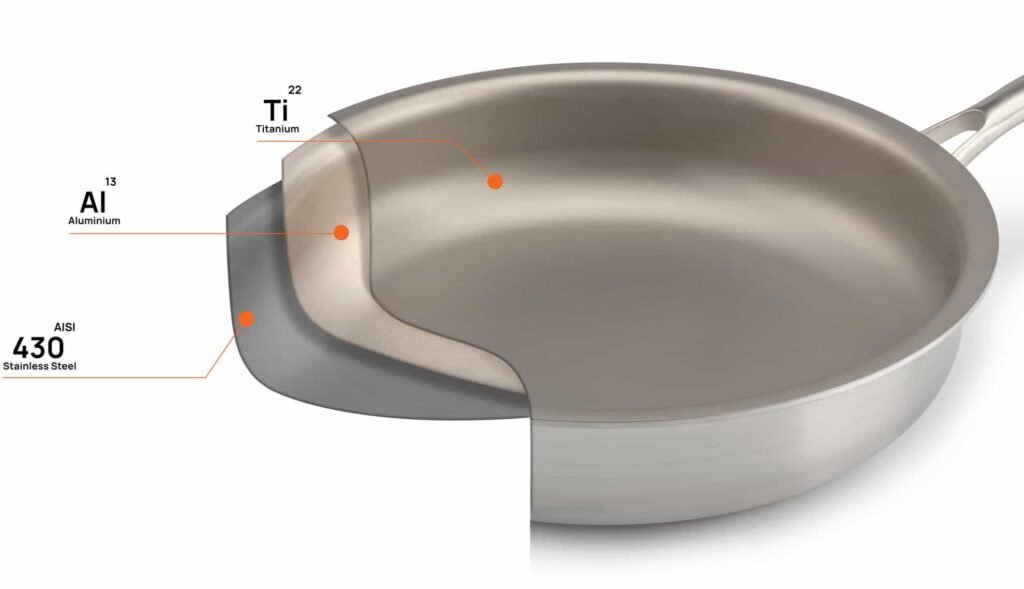
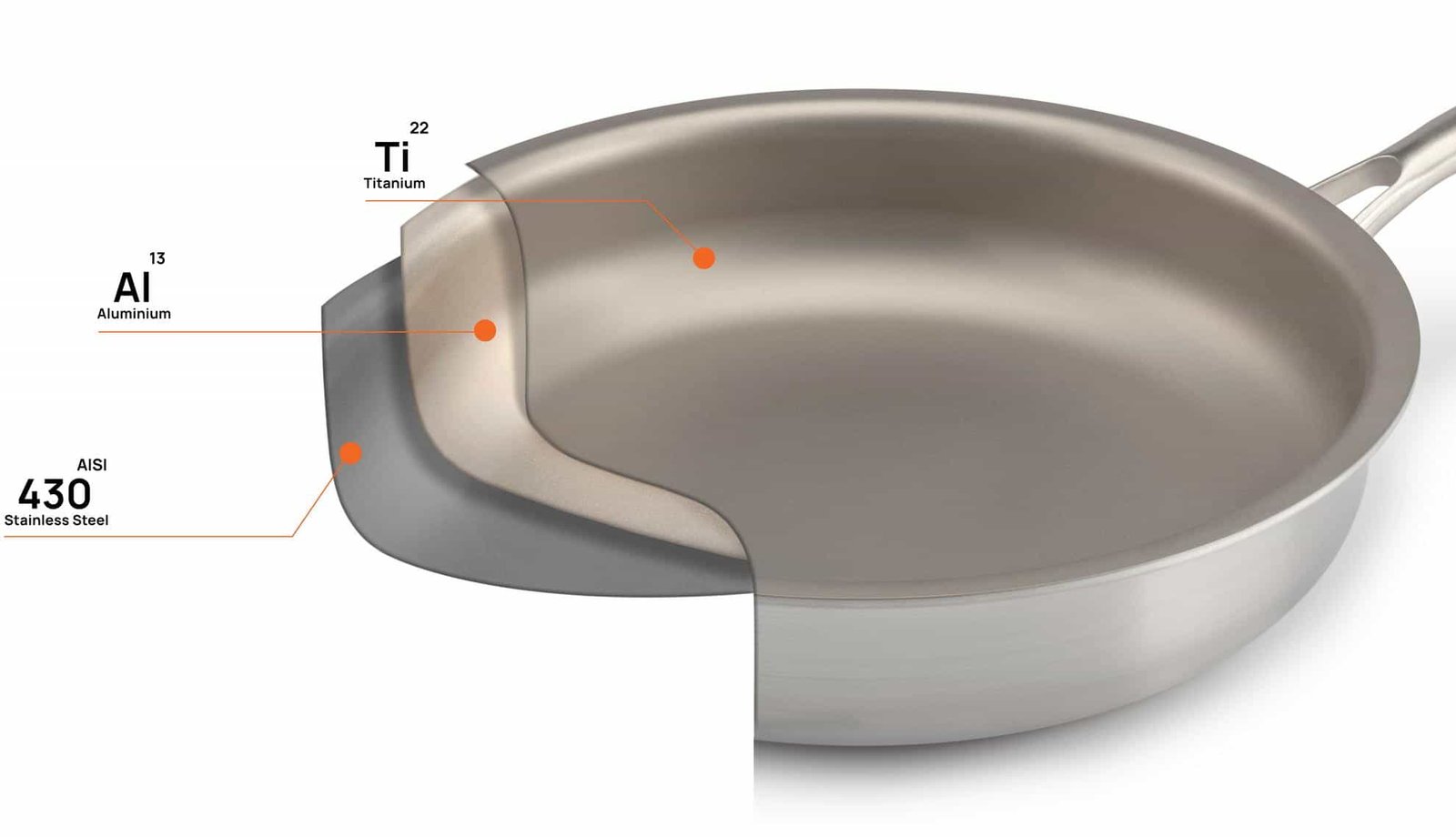
At TADO, we use a carefully engineered three-layer composite construction consisting of:
- Grade 1 (TA1) Titanium Cooking Surface
- 1050 Aluminum Heat-Conducting Core
- 430 Stainless Steel Induction Base
Rather than competing with one another, these three materials work together to improve cooking performance, durability, and compatibility across different cooking methods.
Let’s look at each layer in more detail.
Grade 1 (TA1) Titanium Cooking Surface
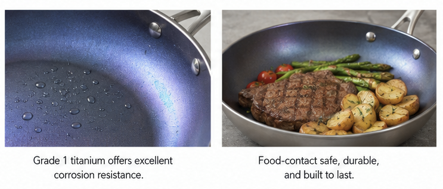
The inner cooking surface is where your food comes into direct contact with the cookware, making material selection especially important.
We use Grade 1 (TA1) Titanium, a commercially pure titanium known for its excellent corrosion resistance, material stability, and suitability for food-contact applications.
One of titanium’s most valuable characteristics is its ability to naturally form a thin, stable oxide layer when exposed to oxygen. This protective layer helps maintain the surface under normal cooking conditions and contributes to titanium’s excellent resistance to corrosion.
Unlike conventional coated cookware, the titanium cooking surface is part of the cookware’s structural material rather than an applied decorative finish.
Benefits of Grade 1 Titanium
- Excellent corrosion resistance
- Durable food-contact surface
- Long-term material stability
- Suitable for everyday cooking
- Lightweight yet strong
- Designed for years of regular use
1050 Aluminum Heat-Conducting Core
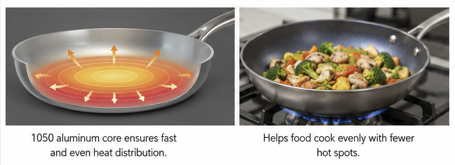
Titanium is durable, but aluminum is responsible for efficient heat transfer.
A 1050 aluminum core rapidly spreads heat across the cooking surface, helping reduce hot spots and improve cooking consistency while keeping the cookware lightweight.
Key Benefits
- Fast and even heating
- Improved temperature distribution
- Responsive cooking performance
430 Stainless Steel Induction Base
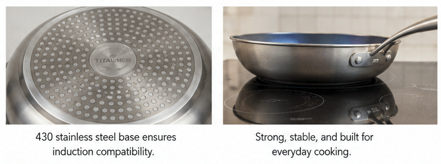
The outer layer uses 430 stainless steel, providing magnetic properties for induction compatibility while adding structural strength and durability.
This design allows the cookware to work efficiently on induction, gas, electric, and ceramic cooktops.
Key Benefits
- Induction compatible
- Strong and durable base
- Suitable for multiple cooktops
Tao Jing Ceramic Crystal Nano Technology
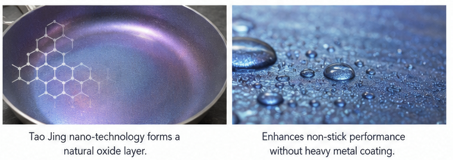
Material quality is only part of the equation. Surface engineering is equally important.
Titaudou’s Tao Jing Ceramic Crystal Nano Technology transforms the titanium surface under carefully controlled high-temperature conditions, creating a naturally formed blue-purple titanium oxide layer.
Unlike traditional non-stick coatings, this surface is created through a material transformation process rather than by applying an additional coating.
The result is a harder, more corrosion-resistant surface with a distinctive appearance and long-lasting performance.
Titanium Cookware Pros and Cons
Like any cookware material, titanium has both strengths and limitations. Understanding these pros and cons can help you choose the right cookware for your cooking style and long-term needs.
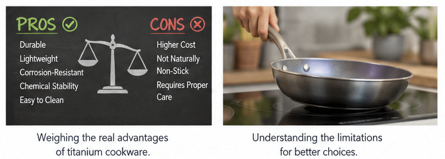
Pros of Titanium Cookware
- Lightweight: Easier to lift and handle than cast iron or many stainless steel pans.
- Corrosion Resistant: Grade 1 titanium naturally resists rust and corrosion, making it suitable for everyday cooking.
- Food-Contact Safe: Titanium is chemically stable and does not readily react with acidic or alkaline foods under normal cooking conditions.
- Fast and Even Heating: A 1050 aluminum core helps distribute heat more evenly, reducing hot spots.
- Induction Compatible: A 430 stainless steel base allows the cookware to work on induction, gas, electric, and ceramic cooktops.
- Long Service Life: The durable three-layer construction is designed for years of regular use.
Cons of Titanium Cookware
- Higher Initial Cost: Premium titanium cookware generally costs more than conventional aluminum or stainless steel cookware because of its advanced materials and manufacturing process.
- Not All Titanium Cookware Is the Same: Some products use only titanium-reinforced coatings, while others feature a true titanium cooking surface. Understanding the construction is important before purchasing.
- Cooking Performance Depends on Design: Heat distribution and non-stick performance are influenced by the cookware’s overall construction and surface engineering, not simply by the presence of titanium.