

Titanium Micro-Arc Oxidation: Benefits, Process and Applications
Titanium micro-arc oxidation is an electrochemical surface treatment that converts the outer surface of titanium into a hard, ceramic-like oxide layer.
Also known as plasma electrolytic oxidation, or PEO, the process can improve surface hardness, wear resistance, galling resistance and electrical insulation. It can also create a porous surface for sealants, lubricants or functional elements.
These capabilities make micro-arc oxidation relevant to selected titanium components used in aerospace, marine engineering, precision machinery, medical devices and industrial equipment.
However, the results depend on the titanium grade, component geometry, electrolyte chemistry, electrical parameters and post-treatment. MAO should therefore be developed around the real operating conditions of the part rather than treated as a standard coating that performs identically on every product.
What Is Titanium Micro-Arc Oxidation?
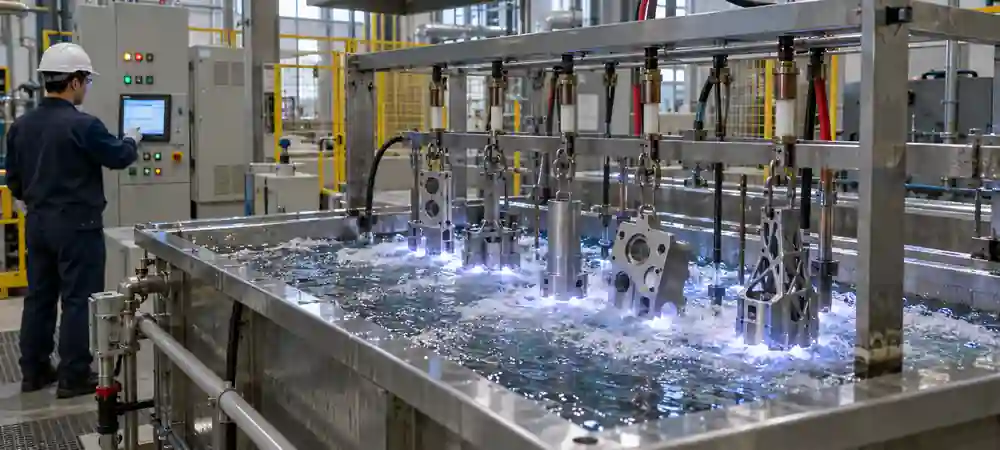
Micro-arc oxidation, commonly abbreviated as MAO, is a high-voltage electrochemical process used to form an oxide-ceramic layer on titanium and other valve metals.
During treatment, the titanium component is immersed in an aqueous electrolyte and connected to a controlled power supply. An oxide layer initially grows through conventional electrochemical oxidation. As the voltage rises, localized electrical breakdown produces numerous short-lived micro-discharges across the surface.
These discharges trigger a combination of electrochemical reaction, localized heating, melting, rapid solidification and phase transformation. The result is a titanium oxide layer that is thicker and more ceramic-like than the natural passive film found on untreated titanium.
A typical MAO coating has a relatively dense region near the titanium substrate and a more porous outer region. The inner layer can contribute to barrier protection, while the outer pores can retain sealants, lubricants or functional particles.
Because the oxide grows from the titanium surface, MAO is better described as a surface-conversion process than as a conventional paint or plated coating.
Why Is Micro-Arc Oxidation Used on Titanium?
Titanium is strong, lightweight and naturally corrosion-resistant, but its untreated surface can perform poorly under repeated sliding contact.
Two titanium parts rubbing against each other may experience adhesive wear, material transfer or galling. The naturally formed passive oxide film is also very thin and can be repeatedly damaged in combined wear and corrosion conditions.
Micro-arc oxidation addresses the surface rather than changing the entire component. The titanium substrate continues to provide structural strength and low weight, while the engineered oxide layer provides additional surface functions.
In practical applications, MAO is mainly considered for four reasons:
- Improving wear and galling resistance
- Supporting corrosion protection in demanding surface conditions
- Providing electrical or thermal functionality
- Creating a platform for sealing, lubrication or biofunctional surfaces
The coating required for one purpose may not be suitable for another. A wear-resistant mechanical part and a bioactive medical surface, for example, require different electrolyte systems and acceptance criteria.
How Does MAO Improve Titanium Wear Resistance?
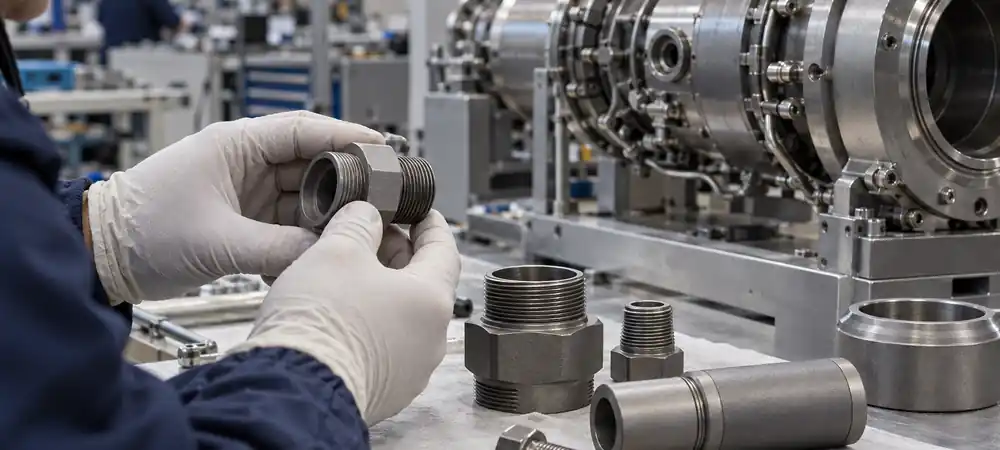
Micro-arc oxidation improves wear resistance by replacing direct contact with the relatively soft titanium surface with a harder oxide-ceramic layer.
This can reduce material transfer and delay exposure of the underlying titanium during sliding contact. It may also help maintain the geometry of selected contact surfaces for a longer period.
The benefit is particularly relevant to:
- Sliding or rotating titanium components
- Mechanical guide parts
- Pump and valve components
- Precision assemblies
- Titanium fasteners and connectors
- Aerospace and automation components
- Textile machinery parts
Galling control is one of the most practical reasons to consider MAO.
Titanium threaded parts and close-tolerance assemblies can seize when they are tightened, removed or repeatedly moved under load. A ceramic oxide layer separates the metallic surfaces and changes their friction behavior, reducing direct titanium-to-titanium adhesion.
That does not mean every MAO coating will have a low coefficient of friction. A rough, highly porous surface may initially produce abrasive debris or damage the opposing component.
For heavily loaded threads or sliding systems, the best solution may be a combination of MAO, controlled finishing and a compatible lubricant or solid-lubricant treatment.
From a manufacturing perspective, the friction pair must be evaluated as a system. Coating hardness alone cannot predict service life without considering load, speed, lubrication and the counterface material.
Can Micro-Arc Oxidation Improve Titanium Corrosion Resistance?
MAO can support corrosion protection, but its effect depends strongly on coating structure and service conditions.
Titanium already has excellent corrosion resistance in many environments because of its stable passive oxide film. The role of micro-arc oxidation is not simply to make titanium “corrosion-resistant.” Instead, it can create a thicker barrier, protect the surface during repeated wear and provide a base for additional sealing.
This may be valuable for titanium components exposed to:
- Seawater and offshore environments
- Chemical-processing fluids
- Simultaneous wear and corrosion
- Dissimilar-metal contact
- Repeated mechanical damage
- Aggressive cleaning or operating cycles
The relatively dense inner region of an MAO coating can slow the movement of corrosive media toward the substrate. The porous outer region can also be filled with an organic or inorganic sealant to improve barrier performance.
Porosity is therefore both an opportunity and a risk.
It allows the coating to carry functional materials, but connected pores or microcracks can also provide a route for chloride-containing water or chemicals to reach the substrate. For this reason, coating thickness alone should never be used as proof of corrosion protection.
A marine or chemical-industry project should be evaluated under representative conditions, including the actual medium, temperature, crevice geometry, flow, contact materials and exposure duration.
What Does MAO Add to Marine Titanium Components?
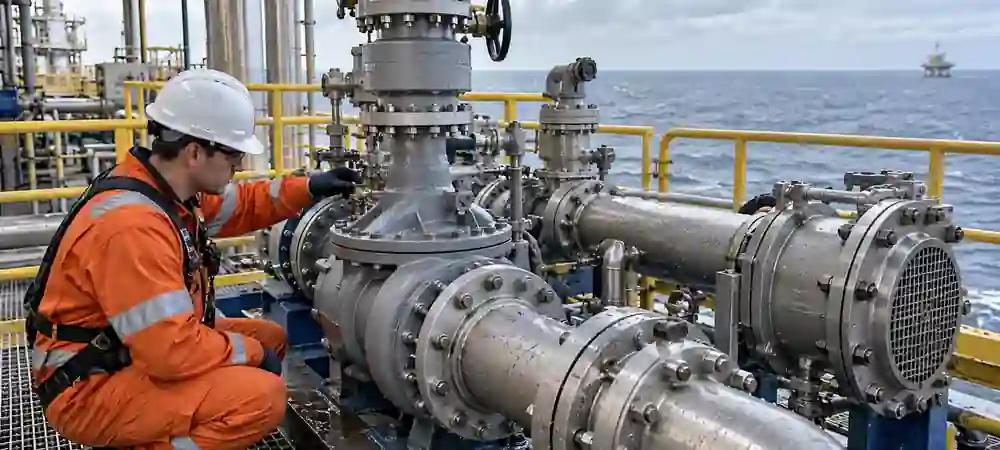
For marine applications, the main value of titanium MAO is often the combination of surface hardening, electrical isolation and support for sealing.
Potential applications include selected pump parts, valve components, fasteners, sliding surfaces and offshore equipment. These are situations in which titanium may face mechanical contact in addition to seawater exposure.
MAO may also help electrically separate titanium from another metallic component. This can be useful in assemblies containing dissimilar metals, although the entire galvanic system still needs to be reviewed.
Micro-arc oxidation does not replace correct alloy selection, crevice design, cathodic-protection analysis or representative seawater testing. It should be treated as one part of the surface-protection system.
Can MAO Provide Electrical Insulation?
Yes. The oxide-ceramic layer formed by micro-arc oxidation can provide electrical insulation for selected titanium components.
Possible uses include:
- Electrical separation between metal components
- Insulating surfaces in sensors and precision assemblies
- Reducing direct conductive contact between dissimilar metals
- Functional dielectric layers
- Selected electronic or electromechanical components
The electrical performance of an MAO layer depends on thickness, porosity, moisture, edge coverage and local defects. A coating that looks uniform may still contain weak points around sharp corners, contact marks or openings.
When electrical insulation is important, the drawing or technical specification should define the required insulation resistance, dielectric breakdown voltage, test conditions and acceptable contact areas.
Simply specifying “MAO coating” does not define electrical performance.
Can MAO Provide Thermal Protection?
A titanium oxide-ceramic layer can provide thermal functionality in selected applications because its heat-transfer behavior differs from that of the titanium substrate.
Depending on its composition, thickness and porosity, an MAO coating may be developed for localized thermal insulation, high-temperature oxidation protection or components exposed to both heat and friction.
Potential uses include selected aerospace parts, engine-adjacent components and industrial equipment operating under thermal cycling.
High-temperature performance must be validated under realistic conditions. Titanium and the oxide layer expand differently during heating and cooling. Repeated thermal cycles can create stress, cracks or local coating failure.
Thermal projects should therefore consider more than room-temperature hardness. Relevant evaluations may include thermal cycling, thermal shock, high-temperature oxidation and coating adhesion after exposure.
Why Is MAO Studied for Medical Titanium?
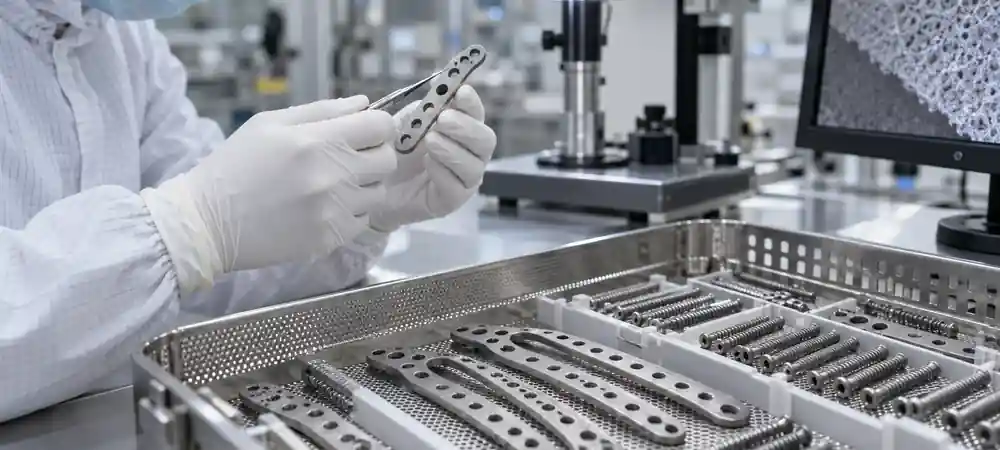

Micro-arc oxidation can create a porous, chemically adjustable surface on medical titanium.
During the process, selected elements from the electrolyte may be incorporated into the growing oxide layer. Research has investigated calcium-, phosphorus-, zinc- and copper-containing surfaces for possible effects on bone response, bioactivity or antibacterial performance.
This makes MAO relevant to the development of:
- Orthopedic implants
- Dental implants
- Bone-fixation components
- Porous titanium implants
- Selected medical and dental instruments
The important point is that MAO acts as a surface platform. Its value is not limited to hardness or corrosion protection; surface topography and chemistry can be designed for a specific biological objective.
However, a laboratory result is not the same as an approved medical claim. Implant performance depends on coating composition, element concentration, release behavior, substrate design and the biological environment.
Medical applications require dedicated validation for biocompatibility, coating stability, particle release, fatigue, cleaning, sterilization and applicable regulatory requirements.
How Is MAO Used as a Base for Composite Coatings?
The pores created during micro-arc oxidation can retain additional functional materials.
Instead of increasing coating thickness indefinitely, engineers may combine a hard MAO base with another material that supplies the missing property.
Examples include:
- Sealants for improved barrier protection
- Solid lubricants for lower friction
- Polymers for pore filling
- Sol-gel top layers
- Bioactive particles
- Antibacterial agents
- Photocatalytic materials
- Secondary protective coatings
This approach can produce a more balanced surface system.
For example, the MAO layer may carry mechanical load, while a lubricant-filled outer region reduces friction. In another application, a sealant may close connected pores and improve protection against liquid penetration.
The correct combination depends on whether the component needs wear resistance, corrosion protection, lubrication, insulation or biological functionality.
What Is the Titanium Micro-Arc Oxidation Process?
A typical industrial MAO process includes the following stages:
- Review the titanium grade, drawing and application conditions.
- Remove machining oil, polishing residue and other contamination.
- Prepare the surface through blasting, grinding, polishing or chemical activation.
- Define the electrical contact and masking areas.
- Mount the component on a conductive fixture.
- Immerse it in the specified aqueous electrolyte.
- Apply the controlled voltage, current and pulse program.
- Control bath temperature, treatment time and electrolyte circulation.
- Rinse and dry the treated component.
- Apply sealing, polishing or another post-treatment if required.
- Inspect and document the completed batch.
The treatment parameters are interdependent. Voltage, current density, pulse frequency, duty cycle, electrolyte composition, processing time and temperature all affect the micro-discharges and final coating structure.
Two parts processed at the same nominal voltage can still perform differently when their titanium grade, surface finish, geometry, loading area or electrical contact position changes.
That is why laboratory parameters should not be copied directly into mass production without sample validation.
How Does Component Design Affect MAO?
Component geometry has a direct influence on coating uniformity.
Sharp edges and openings may concentrate the electrical field and receive stronger discharges. Deep holes, narrow channels and shielded areas may receive less treatment. Threads and tight fits may also be affected by coating growth.
MAO should therefore be reviewed before machining allowances and final tolerances are fixed.
The manufacturing drawing should identify:
- Surfaces requiring treatment
- Areas requiring masking
- Precision fits and sealing surfaces
- Threads and internal cavities
- Permitted fixture contact points
- Acceptable coating buildup
- Appearance-critical surfaces
Early review helps prevent a technically successful coating from creating dimensional or assembly problems later.
Where Is Titanium MAO Used?
Aerospace and High-Performance Equipment
MAO may support selected aerospace titanium components that require better wear behavior, galling resistance, electrical isolation or thermal functionality.
Fasteners, connectors, moving interfaces and equipment components are possible examples. Fatigue-sensitive parts require additional assessment because surface roughness and coating defects may affect fatigue behavior.
Marine and Chemical Equipment
Titanium pump parts, valve components, fasteners and sliding surfaces may use MAO when corrosion exposure is combined with wear, electrical-isolation requirements or contact with other metals.
Representative seawater or chemical testing remains necessary.
Precision Machinery and Automation
Mechanical guides, sliding parts, fixtures and automation components can benefit from harder titanium surfaces and reduced adhesive wear.
The test program should reproduce the actual load, speed, lubricant and counterface material.
Medical and Dental Components
MAO can produce porous and chemically functional titanium surfaces for selected implant and instrument applications.
These products require application-specific biological, mechanical and regulatory verification.
High-End Consumer Products
Selected outdoor equipment, tools and titanium accessories may use MAO for surface hardening, appearance or functional performance.
For cookware, tableware and other food-contact products, the electrolyte chemistry, coating stability and applicable food-contact requirements must be evaluated separately. A process developed for an industrial or medical component should not automatically be assumed to be suitable for food contact.
What MAO Can—and Cannot—Do
Micro-arc oxidation can create a hard, strongly integrated and highly adaptable surface on titanium. It can also support sealing, lubrication, electrical insulation and biofunctional design.
It cannot guarantee the same improvement on every titanium grade or component.
The main limitations are:
- Increased surface roughness
- Dimensional buildup
- Porous or cracked outer regions
- Possible non-uniformity around complex geometry
- Local brittleness of the ceramic layer
- Additional energy and process cost
- The need for sealing in some corrosion applications
- Application-specific fatigue and thermal validation
In other words, MAO works best when it is developed for a defined problem rather than added as a general upgrade.
What Should B2B Buyers Include in an MAO RFQ?
A useful request for quotation should identify the component, operating environment and required result.
Buyers should provide the titanium grade, drawings, treatment areas, masking requirements, expected order quantity and relevant operating conditions. Where possible, the RFQ should also define coating thickness, roughness, dimensional limits, acceptable contact marks and required performance tests.
For wear applications, include the load, movement, lubricant and counterface material. For corrosion applications, identify the medium, temperature and exposure conditions. For electrical applications, define the insulation or dielectric requirement.
If the project is still under development, it is better to request treated samples and comparative testing before fixing a final production specification.
How Should Buyers Evaluate an MAO Supplier?
A capable supplier or manufacturing partner should understand more than the oxidation step itself.
The project may involve titanium material verification, machining, surface preparation, fixture design, masking, MAO processing, post-treatment and final inspection. Weak control at any of these stages can affect the coating.
Buyers should confirm that the production route can control:
- Titanium material and substrate condition
- Cleaning and surface preparation
- Electrical contact and masking
- Electrolyte condition and bath temperature
- Electrical process parameters
- Coating thickness and surface condition
- Post-treatment
- Inspection and batch traceability
Depending on the application, evaluation may include coating thickness, roughness, hardness, microscopic structure, wear, corrosion or electrical testing.
TADO supports titanium material selection, custom component manufacturing and the coordination of suitable surface-treatment processes based on customer drawings and application requirements.
Frequently Asked Questions About Titanium MAO
What is titanium micro-arc oxidation?
Titanium micro-arc oxidation is a high-voltage electrochemical process that converts the titanium surface into a hard oxide-ceramic layer. It is also called plasma electrolytic oxidation or PEO.
What are the main benefits of MAO on titanium?
The main potential benefits are improved surface hardness, wear resistance, galling resistance, electrical insulation and support for sealing or other functional surface treatments.
Is MAO the same as titanium anodizing?
MAO is related to anodizing but uses higher electrical energy and produces micro-discharges. It normally creates a thicker and more ceramic-like oxide layer than conventional color anodizing.
Does MAO always improve titanium corrosion resistance?
No. Corrosion performance depends on coating density, connected porosity, cracks, sealing and the operating environment. The coating should be tested under representative service conditions.
Can complex titanium components be treated?
Many complex parts can be treated, but sharp edges, deep holes, narrow gaps and shielded areas may develop uneven coatings. Fixture, electrode and component design matter.
Does MAO change component dimensions?
Yes. Part of the oxide layer grows outward from the original surface. Threads, precision fits and sealing surfaces should be reviewed before treatment.
Can MAO be used on food-contact titanium products?
Potentially, but suitability depends on the electrolyte, incorporated elements, coating stability and applicable food-contact regulations. A formulation used for another industry should not automatically be used for cookware or tableware.
Conclusion
Titanium micro-arc oxidation turns the surface of a titanium component into a functional oxide-ceramic system.
Its most established value lies in surface hardening, wear control and galling resistance. Depending on coating design, it may also support corrosion protection, electrical insulation, thermal functionality and bioactive or composite surfaces.
The best results come from matching the coating to the component’s real operating conditions. Titanium grade, surface preparation, geometry, electrolyte chemistry, electrical control and post-treatment all affect performance.
For engineering buyers, importers and industrial brands, sample validation should come before mass-production approval. A coating should be evaluated by what it does in the intended application—not only by its voltage, color or nominal thickness.
TADO supports international customers with titanium materials, custom titanium components, CNC machining, surface-treatment coordination and OEM manufacturing solutions.
Contact us to discuss drawings, samples, material declarations, testing requirements or wholesale cooperation.
Xi’an Taidou Metal Products Technology Co., Ltd.
Website: https://tieedo.com/
Email: overjunjun@gmail.com
WhatsApp: +64274075362
Tel: +86 18629501987
Related Articles
Titanium Alloy Surface Treatment and Corrosion Resistance
https://tieedo.com/news/titanium-alloy-surface-treatment-corrosion-resistance/
Titanium Anodizing: Process, Types and Colors
https://tieedo.com/news/titanium-anodizing-process-types-colors/
Titanium Supply Chain Security: Why Sponge Titanium Matters
https://tieedo.com/news/titanium-supply-chain-security-why-sponge-titanium-matters-across-advanced-industries/