

Titanium Alloy Surface Treatment for Corrosion Resistance: A Practical Selection Guide
Titanium alloys are widely selected because they combine useful strength-to-weight performance with naturally strong corrosion resistance. Their surface quickly forms a thin, stable titanium-oxide film. That passive film is the starting point—not a guarantee that every titanium grade will suit every service condition.
Surface treatment becomes relevant when an application adds demanding variables: sliding wear plus corrosion, a chloride-containing crevice, elevated temperature, a dissimilar-metal joint, repeated cleaning chemicals, or a biomedical interface. The right treatment can change surface chemistry, roughness, hardness, wettability or coating-barrier performance. The wrong choice can add cost, create coverage problems on complex geometry, or introduce a coating/interface failure mode.
For engineering buyers, the practical question is therefore not “Which treatment is best?” It is “Which surface system has been qualified for this alloy, geometry, environment and duty cycle?”
Direct answer: Select titanium alloy surface treatment from the actual exposure conditions and validation plan. Chemical conversion, anodizing or micro-arc oxidation, thermal/laser processing, PVD coatings and ion implantation solve different problems. No single method is automatically superior across aerospace, marine, medical and industrial service.
Why titanium alloys sometimes need surface modification
Commercially pure titanium and titanium alloys resist many environments because of their protective oxide film. The Royal Society of Chemistry notes that titanium’s low reactivity in practice is linked to this thin oxide layer. Titanium properties and uses
However, corrosion performance remains system-dependent. Relevant variables include alloy composition, temperature, solution chemistry, oxygen availability, crevice geometry, stress, surface finish and galvanic coupling to another metal. A surface that performs well in aerated seawater may require different qualification for a hot, low-oxygen crevice or a fluoride-containing process stream.
Surface engineering can support four common objectives:
- Improve resistance to a defined corrosive medium.
- Reduce wear, fretting or galling where sliding contact also damages the passive film.
- Improve adhesion for a subsequent coating, adhesive or deposited layer.
- Tailor surface morphology and chemistry for a biomedical or functional interface.
It is important to separate corrosion from every other surface problem. A harder layer does not automatically deliver better long-term corrosion resistance. Likewise, a thicker oxide layer is not automatically the right choice if it is porous, cracked or unsuitable for a joined assembly.
The main titanium alloy surface-treatment options
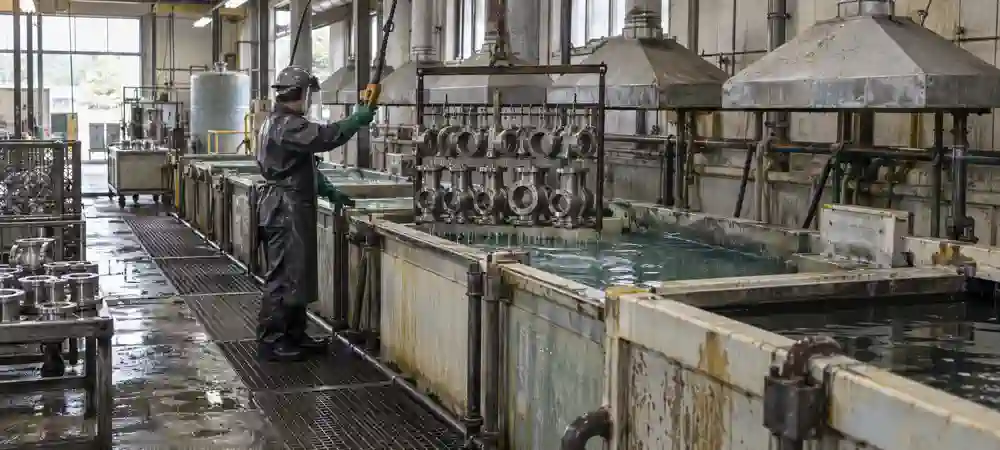
1. Chemical treatment and chemical conversion
Chemical treatment includes cleaning, pickling, etching, passivation-oriented steps and chemical conversion routes. Depending on the chemistry and process control, these methods can remove contamination, adjust roughness or create a modified oxide-rich surface.
Where it fits: preparation before joining or coating, corrosion-focused cleaning/conditioning, and some biomedical surface-preparation routes.
Why buyers use it: it can be practical for larger parts and can reach many geometries more easily than line-of-sight deposition methods.
What to qualify: chemical concentration, temperature, immersion time, rinsing quality, hydrogen pickup risk where relevant, surface cleanliness, dimensional change and waste-treatment controls. A chemical process must be written as a controlled specification, not simply described as “acid treated” or “passivated.”
2. Thermal and laser-based surface processing
Thermal treatment, laser texturing and laser cladding can change near-surface microstructure or add a locally engineered layer. These processes may be considered when a component requires local wear control, texture, repair or specific interface behavior.
Where it fits: localized functional zones, selected aerospace and industrial components, and structured medical surfaces.
Why buyers use it: processing can be targeted to a defined area instead of the entire component.
What to qualify: heat-affected zone, residual stress, distortion, microcracking, oxidation control, fatigue performance and repeatability across batches. For aerospace applications, titanium is commonly associated with structures, compressor-side engine components and other weight-sensitive parts—not the hottest turbine-blade service zones. The service-temperature limit must be assessed for the exact alloy and component.
3. Anodizing and micro-arc oxidation (MAO/PEO)
Anodizing grows an oxide layer electrochemically. Micro-arc oxidation—also called plasma electrolytic oxidation (PEO)—uses higher-energy discharges to form a thicker ceramic-like oxide layer. Results depend heavily on alloy, electrolyte, voltage program, current density, treatment time and any sealing step.
Where it fits: components that need a controlled oxide surface, enhanced wear/corrosion balance, or a surface prepared for a specific functional requirement.
Why buyers use it: the process can create strongly bonded oxide layers because the layer is formed from the substrate surface rather than simply laid on top.
What to qualify: porosity, thickness distribution, surface roughness, sealing, dielectric behavior where relevant, fatigue impact, corrosion testing in the actual medium and coverage at edges/bores. Do not use a generic “corrosion resistance improved by X%” claim without the test electrolyte, exposure duration, alloy grade and measurement method.
4. Physical vapor deposition (PVD)
PVD deposits thin hard coatings in a controlled vacuum process. Systems may use nitrides, carbides, carbon-based films or multilayers. For titanium parts, PVD is usually considered when wear, friction, appearance or barrier performance must be evaluated together.
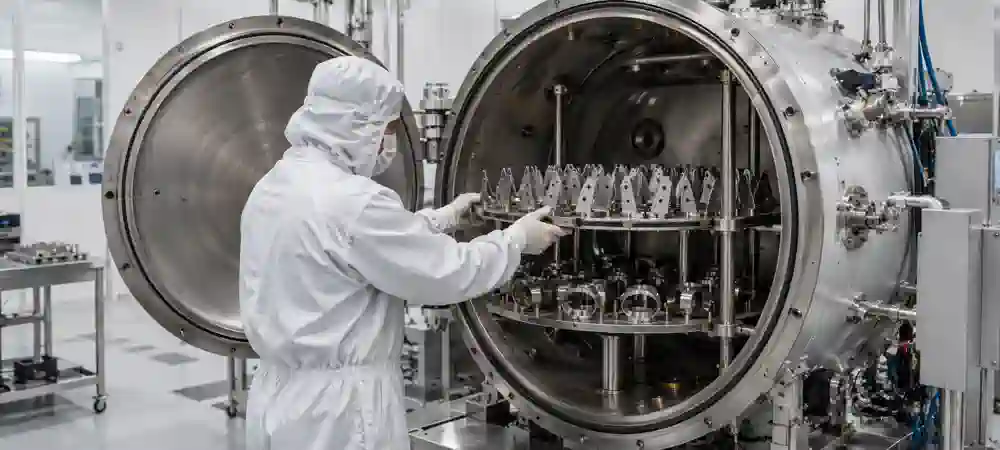
Where it fits: precision parts, tools, sliding interfaces and selected high-value components with well-controlled geometry.
Why buyers use it: coating chemistry and thickness can be tightly specified, while the coating can add hardness or alter tribological behavior.
What to qualify: substrate preparation, coating thickness, adhesion, pinholes/defects, edge coverage, substrate-coating compatibility, thermal cycling and corrosion behavior after scratch or wear damage. PVD is generally line-of-sight; deep recesses and complex internal surfaces may not receive uniform coverage.
5. Ion implantation and ion-assisted processes
Ion implantation introduces ions into the near-surface region without applying a conventional thick coating. It can alter hardness, chemistry and tribological behavior while preserving much of the component geometry.
Where it fits: specialised, high-value parts where a shallow modified layer and strong interface continuity are important.
Why buyers use it: the process can avoid a discrete, thick coating interface and offers precise parameter control.
What to qualify: modified-layer depth, dose/energy window, surface damage, part size limits, fixture access, process cost and performance after wear-through. The process is not a universal production answer for large, complex or cost-sensitive components.
How the treatment families compare
| Treatment family | Main surface objective | Typical advantage | Key limitation to manage |
|---|---|---|---|
| Chemical treatment | Clean, etch or chemically condition the surface | Practical preparation for many geometries | Chemistry control, rinsing and consistency |
| Thermal / laser processing | Local microstructure or functional-zone modification | Targeted processing | Heat-affected zone, distortion and fatigue validation |
| Anodizing / MAO | Grow an oxide or ceramic-like layer | Strong substrate-derived oxide interface | Porosity, thickness consistency and sealing |
| PVD | Add a thin functional coating | Controlled coating composition and hardness | Line-of-sight coverage and defect sensitivity |
| Ion implantation | Modify a shallow near-surface zone | No conventional thick coating interface | Cost, depth and part-size limitations |
Surface-treatment selection starts with the exposure map
Before choosing a process, define the component’s exposure map. This avoids the common mistake of selecting a technology from a hardness value, a marketing claim or a laboratory result that does not match the real application.
Ask these questions:
- What is the base material? State the exact grade or alloy, mill condition and heat-treatment condition.
- What is the medium? Identify chloride level, fluoride or reducing-acid exposure, pH, temperature, oxygen condition and cleaning chemicals.
- Is there mechanical damage? Sliding, fretting, abrasion and impact can disrupt the passive film or a coating.
- Are there joints? Dissimilar-metal fasteners, crevices and trapped fluids can control the real corrosion risk.
- What is the geometry? Bores, threads, sharp edges and deep recesses influence process coverage and inspection access.
- What must be validated? Define corrosion test method, adhesion test, thickness mapping, roughness, hardness, fatigue and visual acceptance criteria before production starts.
The Association for Materials Protection and Performance describes corrosion as material deterioration caused by chemical or electrochemical reaction with its environment. That definition is useful for procurement: the environment and the assembled system matter as much as the material label. AMPP corrosion overview
What B2B buyers should request from a titanium surface-treatment supplier
For an engineering purchaser, titanium alloy surface treatment is not only a material question. It is also a documentation, process-control and supply-risk question. A supplier may correctly name a process—such as titanium anodizing, micro-arc oxidation, PVD coating or ion implantation—yet still be unable to demonstrate that the process was applied consistently to the required part.
Start with a clear drawing or technical specification. It should identify the base grade, for example commercially pure titanium or Ti-6Al-4V, the surface area to be treated, masking requirements, target surface condition, dimensional tolerances and any prohibited visual defects. If the part will be assembled with stainless steel, aluminium, nickel alloy or another metal, include the joint design and galvanic-isolation requirements in the review.
Then request a process package that is specific enough to be audited. A useful package normally includes:
- A controlled work instruction or process specification, including pre-cleaning and surface preparation.
- Defined acceptance criteria for thickness, roughness, colour or appearance where those characteristics matter.
- The inspection plan, sampling frequency and measurement method.
- Certificates or batch records that connect the treated part to the base material lot and process batch.
- Test reports that identify the alloy grade, sample geometry, electrolyte or exposure medium, temperature, duration and test method.
- Nonconformance handling and a documented route for rework, stripping or rejection.
This level of detail is especially important for titanium corrosion resistance claims. A salt-spray result, an electrochemical test and long-term immersion exposure do not measure the same risk. Nor does a result from a polished laboratory coupon automatically represent a threaded, welded, machined or crevice-forming production component. Buyers should ask whether test coupons were processed with the same preparation, fixturing and final treatment as production parts.
For a titanium surface finishing supplier, capacity also matters. Confirm maximum part size, available fixturing, line-of-sight limitations for PVD coating, internal-diameter treatment capability, masking control, cleaning capacity and lead-time consistency. Where a part is safety-critical or costly to replace, a first-article approval with representative coupons is usually more valuable than a generic brochure claim.
Corrosion testing: match the method to the decision
Titanium corrosion testing should be selected to answer a defined engineering question. Electrochemical measurements can help compare surface systems in a specified solution. Immersion exposure can indicate longer-term compatibility. Adhesion and scratch tests can reveal coating-system weakness. Wear-corrosion or fretting-corrosion tests may be necessary when contact damage is part of the duty cycle.
The key is traceability. A meaningful test report states the titanium grade, surface-treatment route, specimen preparation, exposure medium, temperature, duration, replicate count and acceptance logic. Without those details, a performance number cannot be transferred reliably to another alloy, part geometry or environment.
For this reason, B2B buyers should treat qualification as a staged process: laboratory screening first, representative-component testing second, then pilot-batch and production-release controls. This approach helps align the titanium material supplier, machining partner, surface-treatment processor and final assembler before volume production.
Application context: aerospace, marine and biomedical components
Aerospace
In aerospace, surface selection must balance corrosion resistance with fatigue, weight, dimensional control and maintenance requirements. Titanium’s low density and protective oxide film help explain its specialist role in aerospace. For a treated part, qualification should address the exact zone of use, temperature, coating integrity and compatibility with adjacent materials.
Marine and seawater-contact equipment
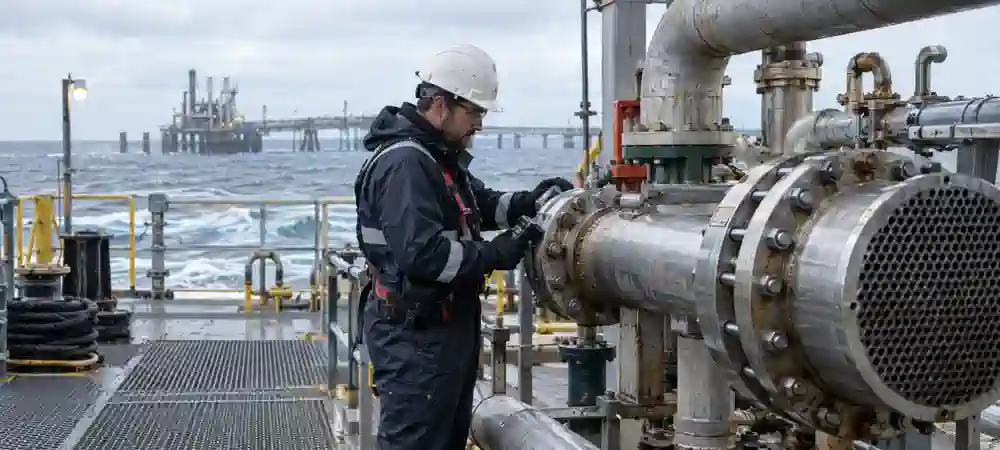
Titanium has a strong reputation in many seawater services, but a project should still assess crevices, deposits, dissimilar-metal joints, temperature and stagnant conditions. For heat exchangers, piping or offshore equipment, the process specification should define material grade, weld condition, surface preparation and galvanic-isolation design—not only the chosen coating or treatment.
Biomedical components
Medical applications add biocompatibility, cleanability, sterilisation and interface requirements. Surface texture and chemistry can affect biological response, while corrosion performance still depends on the full design and processing history. Evidence on titanium implant osseointegration is extensive, but a surface finish should be selected and validated for the specific device and regulatory route. For example, research has shown that laser texture and subsequent blasting can influence osseointegration in a Ti-6Al-4V implant model. PubMed record
Common qualification failures—and how to avoid them
The most expensive surface-treatment mistake is discovering a mismatch after the component reaches service. Common causes include:
- Selecting from an isolated laboratory number rather than the real exposure condition.
- Applying a coating without defining substrate preparation and cleanliness.
- Ignoring edges, threads, bores or masked regions during thickness and coverage inspection.
- Testing an untreated coupon but not a representative welded, machined or assembled component.
- Treating corrosion resistance, adhesion, wear and fatigue as independent when they interact.
- Leaving acceptance criteria unspecified between the material supplier, treatment provider and final assembler.
For B2B sourcing, ask the processor for a controlled process specification, batch traceability, inspection plan and representative qualification data. When service is critical, include witness coupons or production-representative samples in the validation plan.
Frequently asked questions
Does every titanium alloy need surface treatment for corrosion resistance?
No. Titanium already has useful corrosion resistance in many applications because of its passive oxide film. Surface modification is selected when the service environment or performance requirement goes beyond that baseline.
Is micro-arc oxidation always better than anodizing?
No. MAO can form a thicker ceramic-like oxide layer, but its porosity, roughness, processing cost and sealing needs may not suit every part. The correct choice depends on the application and validation criteria.
Can PVD solve corrosion and wear at the same time?
It can be evaluated for both objectives, but coating defects, adhesion, edge coverage and damage in service must be tested. A high hardness value alone does not prove corrosion performance.
What should a buyer request before approving a treated titanium component?
Request the base-alloy specification, surface-treatment procedure, coating or modified-layer specification, batch traceability, inspection results, and qualification data relevant to the component’s real environment.
Final takeaway
Titanium alloy surface treatment is a design and qualification decision, not a generic finishing step. Start with the alloy, environment, geometry and duty cycle. Then select a process that has measurable acceptance criteria and evidence for the actual application.
For buyers sourcing titanium materials or titanium-based OEM products, reliable outcomes begin with controlled material selection, documented processing and realistic validation.
Contact Us
for product specifications, samples, material declarations, testing documentation or wholesale cooperation.
Xi ‘an Taidou Metal Products Technology Co., Ltd.
Room 1604, Block D, Baihualin Financial Innovation Center, No. 51 Fengcheng Second Road, Weiyang District, Xi’an City, Shaanxi Province, P.R.China
Email: overjunjun@gmail.com
WhatsApp: +64274075362
Tel: +86 18629501987
Related TADO Resources
- Titanium products and manufacturing capabilities
- TADO production base
- Quality and certifications
- Titanium guides and industry insights
- Contact TADO for specifications, samples or OEM cooperation